Last updated: 10-05-2026
A hardware wallet is one of those rare products that should feel almost boring. If it is doing its job, it disappears into a drawer for months, signs a handful of transactions when needed, and never becomes the story. The BitBox02, made in Switzerland by Shift Crypto, is built around that idea. It is compact, unshowy, and unusually transparent about how it protects keys. After spending time with the device, its documentation, and the way the company talks about threat models rather than slogans, I came away thinking of it as one of the more grown-up options in a market that still loves flashy screens and endless coin lists. This review looks at the original BitBox02 in particular (not the BitBox Nova which has been released in 2025): the company behind it, the open-source posture, the security architecture, how entropy is generated, which coins it actually supports, the physical design, day-to-day use, and what it is like as a Bitcoin wallet. The goal is not to sell a dream. It is to say, as plainly as possible, who this device is for and who should look elsewhere.
The BitBox02 does not try to be every wallet for every person. It tries to be a carefully scoped signing device with a published threat model, a dual-chip design, and a companion app that is easier than most people expect from Swiss security hardware. That combination is the reason it still matters in 2026, even after the newer BitBox02 Nova arrived with a glass display, a stronger certified secure chip, and iPhone support. The original BitBox02 remains the quieter, cheaper, USB-only sibling, and for many Bitcoiners that is still the more honest form of the product.
Brand and company
Shift Crypto AG is a privately held Swiss company based in Zurich, with design and manufacturing tied to Switzerland rather than a long chain of anonymous contract factories. The brand that users see today is BitBox, but the company history is older than the current name. The first device, originally known as the Digital BitBox and later remembered as the BitBox01, came out of work that began in 2015 under founders Douglas Bakkum and Jonas Schnelli. That timing matters. Hardware wallets were still a young category then, and the team was already thinking about the tension that still defines this industry: how to combine a secure element’s physical hardness with firmware that outsiders can actually read.
The BitBox02 itself launched in 2019. It was not a cosmetic refresh of the first model. Shift rebuilt the hardware and firmware from scratch after the lessons of the BitBox01, which is the sort of sentence companies like to write and then fail to prove. In this case the proof is visible in the published threat model, the dual-chip split, the factory-locked Bitcoin-only edition, and the unusually detailed public writing about seed generation, backups, and what attacks the device is not designed to stop. The company is small by consumer-electronics standards. That can be a weakness if you want a giant support empire and a store in every airport. It can also be a strength if you want a team that still writes like engineers rather than a growth department. Shift’s stated mission is financial sovereignty: the idea that ordinary people should be able to hold and move Bitcoin and a limited set of other assets without handing keys to an exchange. That sounds generic until you notice how consistently the product refuses features that would make marketing easier and audits harder.
Swiss origin is not magic. A jurisdiction with strong privacy norms and a culture of discreet engineering does not automatically produce unbreakable hardware. What it does produce, in this case, is a company that is comfortable publishing x-rays, schematics, a threat model, and firmware hashes, and that sells devices directly, including for Bitcoin, so buyers do not have to expose more identity than they want. The team includes Bitcoin contributors and security engineers rather than a marketing layer that treats “open source” as a sticker. Over more than a decade the company has not become a household name the way Ledger has, and that is part of the brand. BitBox is the device you recommend to someone who already cares about custody, not the device that appears in a football sponsorship. I find that posture reassuring. A hardware wallet company that needs to be famous has incentives that eventually collide with the user’s incentives.
Open Source
Open source is the first thing serious buyers should inspect, because a hardware wallet is a computer that is allowed to know your seed. If you cannot see the code that derives keys and signs transactions, you are trusting a vendor in the most literal sense. BitBox takes that problem more seriously than most of the market. The firmware that runs on the microcontroller is open source under an Apache 2.0 license. The BitBoxApp, which is the desktop and Android companion, is also open source. Hardware information is published, including schematics and x-ray views of the board. That is more than a GitHub dump of a UI layer. It is a deliberate attempt to make the security-relevant software inspectable.
Reproducible builds are the part that separates a sincere open-source claim from a polite one. Shift publishes instructions so that an independent party can compile the firmware and check that the resulting binary matches the official release. WalletScrutiny has verified that the BitBox02 firmware can be reproduced in this way, which is one of the few external checks that actually answers the question “is the file on the website the same program described by the public source?” Community signatures on releases add another layer of binary transparency. The bootloader can also show a firmware hash before the device runs it, so a careful user is not forced to take the app’s word for what was just installed.
There is still a limit, and it should be stated without euphemism. The secure chip itself is not a fully open-source silicon project. On the BitBox02 that chip is a Microchip ATECC608B. Its job is not to run the Bitcoin logic. It hardens the device password, holds secrets used to encrypt the seed on the microcontroller, enforces a monotonic counter against brute force, and participates in device attestation. Cryptographic operations such as BIP32 derivation and signing happen on the microcontroller in auditable code. That is the “best of both worlds” argument Shift has made for years: use a secure chip for physical hardness, keep the money logic in public firmware. It is a coherent design. It is not the same as a world in which every transistor is documented. Anyone who says otherwise is selling a fantasy that no shipping consumer wallet fully delivers.
I care about this more than I care about color screens. A closed firmware stack can be well engineered. It can also hide a signing path that leaks key material, a backup format that phones home, or a coin-addition process that quietly expands the attack surface. With BitBox, the argument is at least testable. Researchers can read the code, reproduce the build, and file bugs against a public bounty program. That does not make the device immortal. It makes the company’s claims falsifiable, which is the only kind of trust I am willing to give a box that holds private keys.
Security
The BitBox02’s security story is layered rather than theatrical. There is no claim that the device survives every laboratory attack by every nation-state. There is a published threat model that says, in substance, that the wallet is designed to stop remote theft, accidental loss of funds through bad software behavior, and privacy leaks that would reveal transaction history before the device is unlocked. Coercion of the owner is largely out of scope, as it is for almost every hardware wallet. Invasive chip-decapping after the user has abandoned the device is treated as a different problem, with the secure chip designed so that its memory should not be readable even then. That honesty is rare and useful. It lets you judge the product against reality instead of against a movie.
At the center is the dual-chip architecture. A general-purpose microcontroller, the ATSAMD51, runs the open-source firmware. A separate secure chip, the ATECC608B, hardens access to the encrypted seed stored on the microcontroller. Unlocking that seed requires a combination of secrets: material on the secure chip, material on the microcontroller, and the user-chosen device password, which never has to be typed into the computer. The password is entered on the device itself with capacitive sliders. The secure chip stretches the password and counts attempts with a monotonic counter, so an attacker who steals the physical device cannot sit there overnight and try every short PIN. The microcontroller also enforces a tight attempt limit. After too many failures the device can wipe itself and force recovery from backup. That is painful if you are sloppy. It is correct if you understand what a hardware wallet is for.
The bootloader is strict in ways that matter more than marketing copy. It accepts only firmware signed by Shift. It refuses downgrades, which blocks the classic attack of flashing an old vulnerable build after a patch is public. It also refuses to install the other edition’s firmware, so a Bitcoin-only unit cannot be quietly converted into a Multi unit, or the reverse. Device authenticity is checked through an attestation key provisioned in the factory and verified by the BitBoxApp. USB traffic between app and device is encrypted. The seed is kept encrypted in memory and decrypted only for the short window in which a signature is needed. Physical tamper evidence includes potting and construction details intended to make opening the case obvious. None of this is a force field. Together it is a serious attempt at defense in depth.
Two features deserve special mention because they are still uncommon. The first is anti-klepto protection against nonce covert-channel attacks. In that class of attack, malicious or compromised signing code can leak private-key material a few bits at a time through the nonces used in signatures. BitBox implemented a protocol, related to work in libsecp256k1, that lets the host contribute randomness in a way that prevents the device from choosing nonces that encode secrets. BitBox was early here, and the feature is not a gimmick. It addresses a real theoretical theft path that ordinary users never think about and attackers with firmware access certainly do. The second is the backup model. Instead of forcing every user to copy twenty-four words under stress, the device can write an encrypted backup to the included microSD card almost immediately. The words remain available later if you want a paper or steel copy. The card is not a substitute for understanding backups. It is a way to reduce the most common catastrophic error in this industry: a mistyped seed phrase.
External review exists. Census Labs audited the firmware, and Shift has used additional outside consulting. There is an active bug bounty. In August 2026 the company shipped firmware 9.26.5, named Dixence, after an internal review that also used AI-assisted analysis and found three issues. Shift stated that there were no reports of stolen funds and that existing seeds were not compromised. One severe path involved a phishing scenario plus unlocking a tampered device so that malicious firmware could be installed. Another affected the Multi edition before a wallet had been set up, when used with a hostile host. A third involved Silent Payments and the risk of locking funds to a wrong address rather than directly stealing the seed. The Bitcoin-only edition was not affected by the uninitialized Multi-edition bug, because that code is not present. This episode is not a reason to discard the product. It is a reason to respect the company’s disclosure style and to install updates. A vendor that never finds bugs is either lucky, quiet, or not looking. A vendor that publishes them, patches them, and says which editions are touched is behaving like an adult.
What the BitBox02 does not offer is a fully air-gapped QR workflow. It is a USB-C device. That means the computer or phone it touches is part of the operational picture. Encryption and on-device confirmation reduce the damage a malicious host can do, but they do not turn the device into a camera-only signer like some specialist Bitcoin tools. If your threat model demands that the signer never share a cable with a general-purpose computer, this is not your device. If your threat model is the far more common one — malware, fake apps, careless backups, and supply-chain substitution — BitBox is aimed directly at you.
Entropy
Seed generation is where a hardware wallet either earns trust or quietly borrows it. If the randomness is weak, biased, or influenced by a single component you cannot inspect, the rest of the security architecture is decoration. BitBox is unusually explicit here. During normal setup the device does not rely on one generator. It combines five entropy sources so that the result is at least as strong as the strongest source, not as weak as the weakest. That phrasing is doing real work. It means an attacker who compromises four sources still does not get to dictate the seed if the fifth remains honest.
The five sources are a true random number generator on the secure chip, a true random number generator on the microcontroller, a factory-installed static random value unique to that device, host entropy supplied by the companion app from the computer’s own randomness, and a cryptographic hash of the device password the user chooses. The last two are independent of the BitBox hardware. That is an important and slightly counterintuitive point. People sometimes dislike that setup requires the app and a computer, as if the host were contaminating the seed. In this design the host is one contributor among several, and the combination rule is meant to prevent a hostile host from collapsing the entropy. The password hash also binds the seed-generation process to something the user created and entered on the device.
For users who do not want to trust any of the device’s own generators, Shift documents a dice-based method. You can generate a seed with physical dice and import it, using official lookup tables and a process in which the device helps with the checksum word rather than forcing you to compute BIP39 checksums by hand. The company is careful not to oversell this. Most people will produce worse randomness by improvising than the five-source factory process produces by default. Dice are useful when they are used correctly, with casino-grade dice, a documented procedure, and no photographs. They are not useful as a ritual that makes a sloppy user feel elite. I like that BitBox supports both postures: a strong default for ordinary self-custody, and an expert path for people who want their entropy to come from the physical world. BIP85-style deterministic entropy also appears in the product family for derived use cases such as a Lightning wallet in the app, which is a sane way to create secondary randomness without exposing the master seed.
If there is a philosophical disagreement in hardware wallets, it is here. Some devices generate seeds entirely offline and treat the computer as an enemy even during setup. BitBox treats setup as a ceremony that can include the host because the combination of sources and the later on-device confirmations are the real control points. I think that is defensible. I also think users should understand it before they buy, because no amount of Swiss branding will comfort someone who wanted a signer that never talks to a laptop until the first receive address is already live.
Coin support
Coin support is where BitBox is most willing to disappoint people, and that is mostly to its credit. The hardware is identical across editions. The firmware is not. The Multi edition supports Bitcoin, Litecoin, Ethereum, Cardano, and more than 1,500 ERC-20 tokens, with WalletConnect available for interacting with Ethereum applications while the keys stay on the device. The Multi edition can also act as a FIDO U2F security key. The Bitcoin-only edition supports Bitcoin and nothing else. That limitation is enforced by the bootloader from the factory. You cannot buy a Bitcoin-only unit and later decide you would like a little Cardano. You cannot buy a Multi unit and later strip it down. The edition is a one-way door.
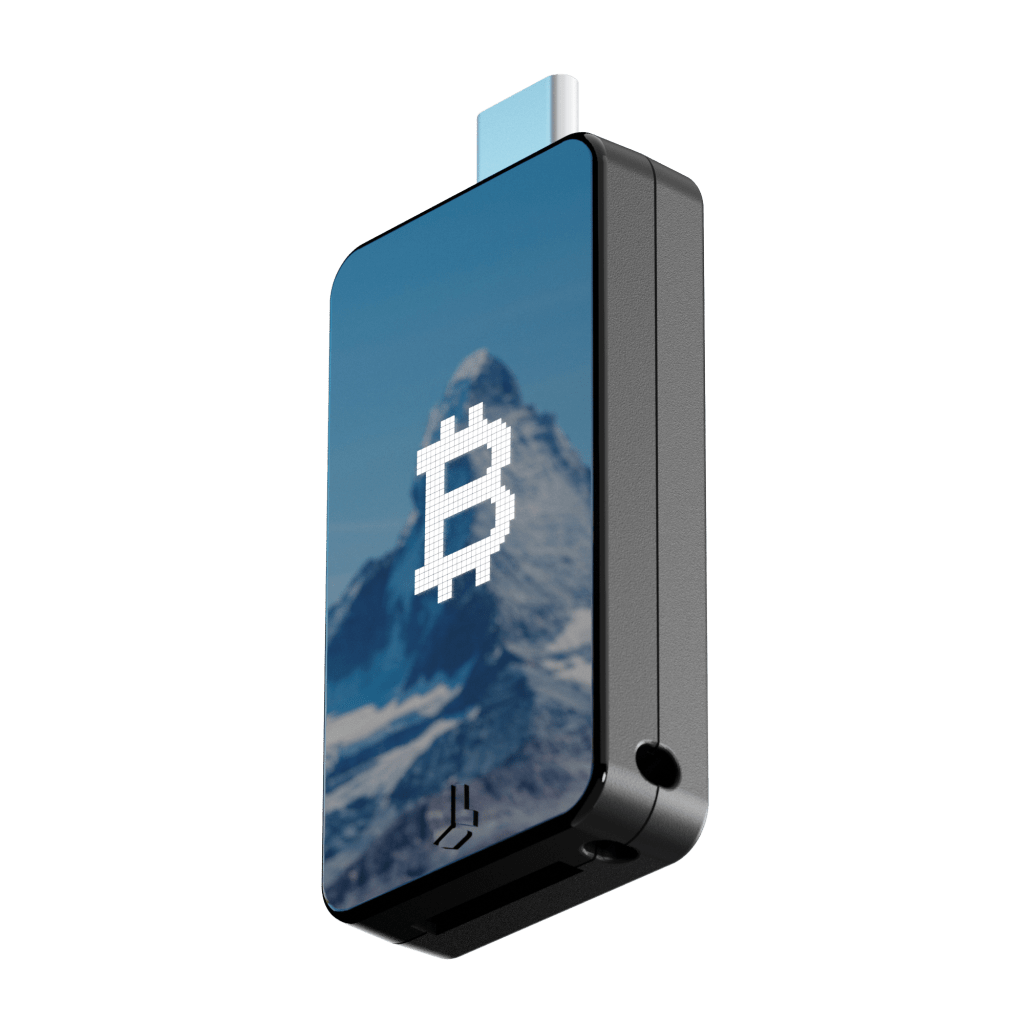
This is not the same as the marketing trick some vendors use when they ship a “Bitcoin edition” that can still accept broader firmware. Shift’s version is cryptographically constrained. The rationale is simple: less code means less surface. Ethereum and token logic, U2F, and extra networks are additional parsers, additional signing paths, and additional ways for a bug to exist. The August 2026 Multi-edition issue in uninitialized devices is a concrete illustration of that principle. If you only hold Bitcoin, paying the same price for a smaller firmware is one of the few security upgrades that costs nothing extra in daily life.
Compared with Ledger or Trezor, the Multi edition is still narrow. There is no attempt to be a museum of every layer-1 that launched last year. There is no sprawling in-app staking mall. If your portfolio is a long tail of obscure assets, this is the wrong product and you will feel that immediately. If your portfolio is Bitcoin plus some ETH and tokens, or Bitcoin alone, the list is adequate and the restraint is the feature. I would rather a company refuse coins it cannot maintain than pretend that every added network is free. It is not free. It is audit time, firmware complexity, and a larger bag of sharp edges.
Design and quality
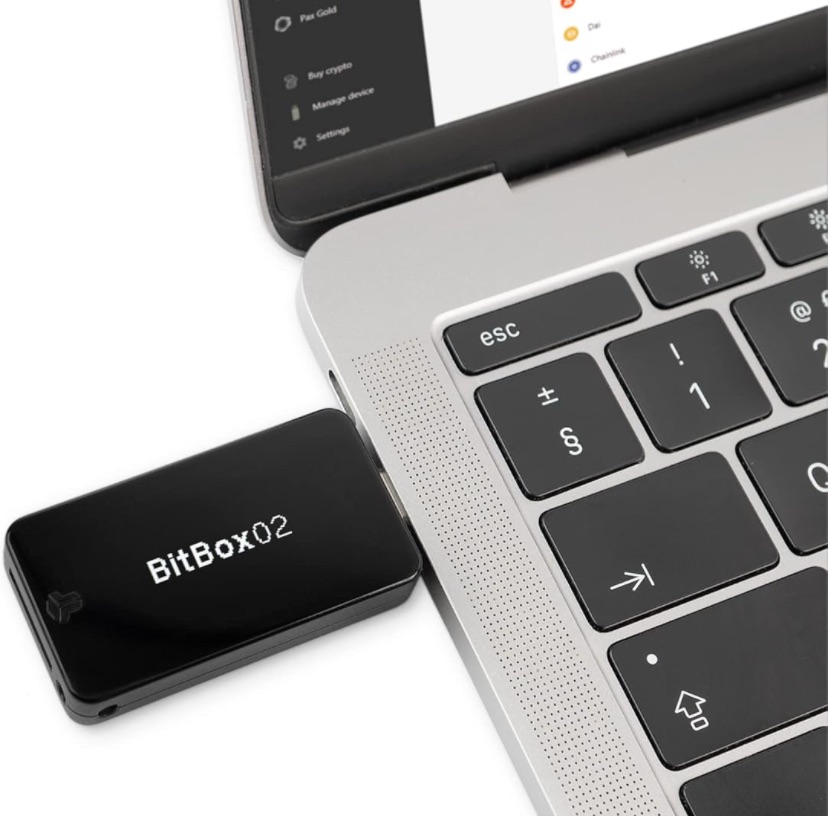
The BitBox02 is small enough to look like a USB accessory rather than a gadget you display. Official figures put it around 54.5 by 25.4 by 9.6 millimeters including the USB-C plug, at about twelve grams, in a polycarbonate body with a 128 by 64 white OLED. When it is unplugged the screen is dark and the device is easy to miss in a cable pouch. That discretion is intentional. A hardware wallet that advertises itself on a desk is a hardware wallet that tells visitors what it is. I prefer objects that do not.
The industrial design is minimal rather than luxurious. This is not metal unibody jewelry. It is a dense little stick with touch sliders along the sides, a short screen, and a microSD slot. In the box you typically get the device, a microSD card, a USB-C extension cable, a USB-C to USB-A adapter, rubber pulls, and labeling stickers. The included card and cables are not trivia. They mean you can set up and back up without a shopping trip. Build quality is solid for the materials used, but reviewers have been consistent for years about the screen: it picks up fingerprints and can scratch, and the text is small. Those complaints are fair. You are buying security geometry, not a luxury object. The Nova later addressed some of this with glass and a more durable display. On the original BitBox02 you live with a workmanlike panel that is good enough for addresses and amounts if you look at it squarely.
I have a soft spot for this kind of object. It feels like a tool. The USB-C plug is part of the body, so there is no dangling pigtail to fail, but you do need the extension cable in tight ports. There is no battery and no wireless radio on the original model, which keeps the bill of materials and the RF attack surface small. Quality, for me, is less about how the plastic feels in a showroom and more about whether the device still behaves after years of being thrown in a bag. The BitBox02’s job is to survive neglect. Its design is aligned with that job, even if it will never win a styling contest against devices that look like they belong next to a flagship phone.
Operation and usability
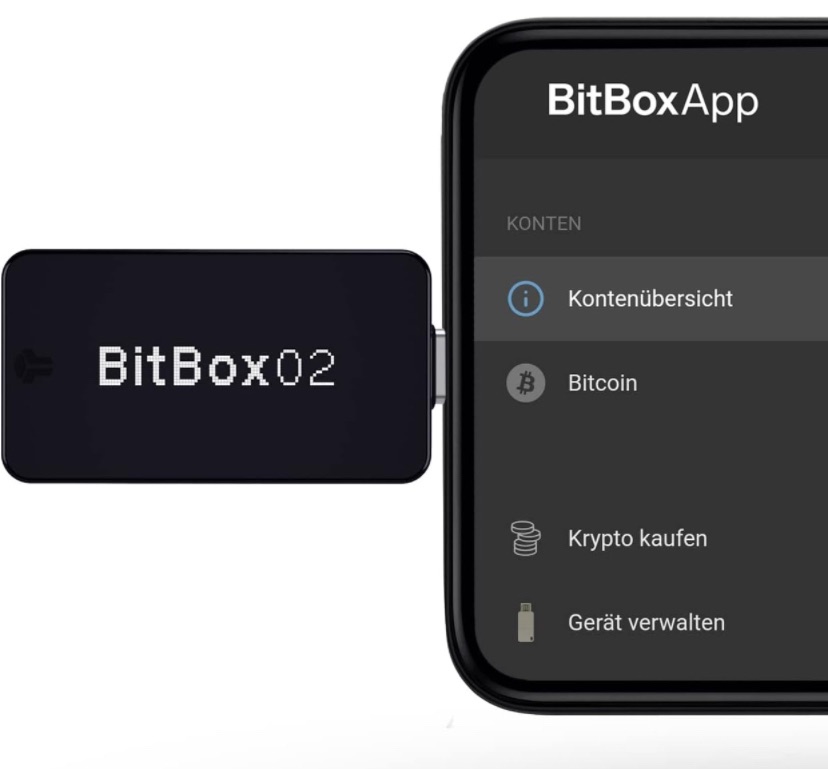
Usability is the surprise. Hardware wallets with strong security stories often punish the user with menus that feel like a 1990s feature phone. The BitBox02 is not invisible, but the BitBoxApp on desktop is among the cleaner companion applications in the category. Setup is a guided path: plug in, verify authenticity, install firmware, choose a device password on the hardware, create or restore a wallet, write the microSD backup, and optionally view the twenty-four words. Password entry on the device is the part that takes practice. You slide and tap on capacitive sensors instead of pressing mechanical buttons. On a table the gestures can feel fiddly. In your hands they become natural after a few sessions. I would not give this device to someone who hates learning a new physical control. I would give it to someone who is willing to practice once in exchange for never typing a PIN into a possibly infected computer.
Daily use is app-centric. You watch balances and build transactions in the BitBoxApp, then confirm destination and amount on the device screen with a gesture. That confirmation is the whole point. If the computer lies, the screen must tell the truth. The display is small, so you must read carefully, especially with long addresses. Features that matter in real life are present without ceremony: multiple accounts, optional Tor, connection to your own Bitcoin node through Electrum-style servers, coin control for UTXO selection, optional BIP39 passphrase for a hidden wallet, and multisig workflows with on-device verification of the important details. Android is supported on the original BitBox02. iPhone is not, which remains the most practical limitation of this specific model. If your life runs on an iPhone and you want mobile signing, the Nova exists for that reason. If you live on a laptop, the original device is complete.
The microSD backup changes the emotional tone of setup. Writing twenty-four words while a machine is watching you is how people make mistakes. Dumping an encrypted backup onto a card in a few seconds is how people actually finish the job. You should still make a steel or paper copy and store it as if it were the money, because cards fail and cards get lost. The difference is that BitBox does not force the most error-prone ritual to be the only ritual. Firmware updates are handled through the app with on-device confirmation and the usual signed-binary constraints. That is slightly less convenient than a phone that updates itself, and it is much safer.
There are integrations beyond the first-party app, including established Bitcoin wallets, which matters if you grow out of a beginner interface. The product is still not a platform. Limited third-party apps, no air-gapped QR habit, and no iOS on this model are real constraints. Usability here means a short path from sealed bag to first receive address, and a confirmation flow that a non-engineer can follow without improvising. On that measure the BitBox02 is better than its austere appearance suggests.
👉 Get a BitBox02 from the official shop
Bitcoin
As a Bitcoin wallet the BitBox02 is in its natural habitat. Native SegWit, modern address types, testnet, coin control, optional Tor, and the ability to point the app at your own node are the features that separate a toy from a custody tool. Multisig support with careful xpub handling is present for people who want a second or third device in a quorum rather than a single point of failure. A passphrase can create a plausible deniability wallet, which is a grim feature and also a realistic one. Silent Payments support has been part of the recent firmware story, which shows that Shift is willing to implement Bitcoin-native privacy work rather than only chasing token lists. The Bitcoin-only edition is the version I would buy for long-term cold storage. The reduced firmware is not a personality test. It is a smaller program that will never grow an ERC-20 parser.
The device is not a maximalist shrine. It does not pretend that USB is air. It does not include a full node. It does not replace Sparrow, Electrum, or a well-run personal server. What it does is hold keys, generate them with documented entropy, sign after on-device review, and stay small enough that you can hide it without thinking like a spy. For receive hygiene, always trust the address shown on the OLED, not the one highlighted in a browser. For spending, use coin control when privacy matters. For backup, treat the microSD as convenience and the words as the last resort that must survive a house fire. Those habits matter more than the logo on the plastic.
I also appreciate that Bitcoin remains first-class while the company resists turning the device into a general-purpose crypto remote control. Lightning in the app, derived through a dedicated path so the hardware wallet is not tricked into exposing the master seed, is an example of adding a feature without pretending the hardware itself should become a hot wallet. That distinction is easy to blur and expensive when it is blurred.
Advantages and disadvantages
The advantages start with posture. Fully open firmware and app code, reproducible builds, a public threat model, Swiss manufacturing, and a factory-locked Bitcoin-only edition form a trust story that does not depend on a single closed secure element doing all the thinking. Dual-chip hardening, on-device password entry, attempt limits, anti-klepto signing, encrypted USB, attestation, and a backup that does not rely solely on handwriting are the practical expressions of that posture. The BitBoxApp is clearer than the category average. The device is discreet. The company has been in the hardware-wallet business long enough to have scars, and it still publishes them. For a Bitcoin-heavy holder who wants to verify rather than merely hope, those are not minor pluses. They are the reason to consider the product at all.
The disadvantages are equally concrete. The original BitBox02 has no iOS support and no Bluetooth, so iPhone-first users are better served by the Nova or by another brand. There is no QR air gap, which will bother people who want the signer isolated from every cable. The screen is small and easy to smudge. Capacitive sliders have a learning curve. Coin support on Multi is modest by mass-market standards, and Bitcoin-only is uncompromising in a way that becomes painful if your plans change. There is no Shamir backup scheme, no large color display, and no sense that you are holding a premium object. Price sits in the mid-to-upper range for a USB stick, commonly around the mid-100s in dollars or Swiss francs depending on edition and shop, which is not outrageous but is enough that you should know why you are paying it. The 2026 firmware disclosures are a reminder that open code and good process still produce bugs. Anyone buying a hardware wallet as a talisman against all future mistakes will be disappointed here, as they would be anywhere else.
There is also a product-line question. The Nova exists. It keeps the open-source stance and improves the secure chip certification, the display, and mobile reach. Choosing the original BitBox02 in 2026 is a choice for simplicity, a lower price, and a radio-free USB-only device. That can be the right choice. It should be a conscious one.
Is the BitBox02 a recommendation?
I would buy a BitBox02 for the same reason I still prefer tools that look slightly under-designed: the company spent its energy on the parts that fail expensive. The seed generation is documented instead of waved away. The firmware can be rebuilt and compared. The Bitcoin-only edition is a real reduction in scope rather than a skin. The backup model respects the fact that human handwriting is a vulnerability. The app is calm. The threat model admits what the device cannot do. Those qualities add up to a hardware wallet I would trust with serious savings after a careful setup, an update to current firmware, and a backup strategy that does not live in a single drawer.
The purchase recommendation depends on the buyer. If you hold Bitcoin as your main asset, want open firmware, and work primarily from a computer or Android phone, the BitBox02 Bitcoin-only edition is an easy recommendation. It is one of the most coherent specialized Bitcoin signers that a non-specialist can still use. If you also hold ether, Cardano, Litecoin, and a normal handful of tokens, the Multi edition is sensible, provided you accept a broader firmware and keep the device updated. If you need iPhone signing, a tougher glass screen, or a newer certified secure chip, skip the original and look at the BitBox02 Nova instead of forcing this model to be something it is not. If you need QR air-gapping, a huge coin universe, or a device that feels like luxury electronics, look at other families entirely.
I would not recommend the BitBox02 as a gift for someone who wants crypto to feel like a game. I would recommend it to a person who already understands that self-custody is a responsibility, who is willing to confirm addresses on a small screen, and who would rather own a slightly plain Swiss USB stick than outsource trust to an exchange or to a closed firmware blob. In that narrower market the BitBox02 is not merely competitive. It is one of the few devices that still feels as if it was designed by people who expect to be argued with, which is exactly how a product that guards keys should feel.
Buy a BitBox02
If you want to get a BitBox02 the official shop should be always the go to place instead of third parties.
rendite.cloud – your finance blog
Affiliate Links. If you purchase one of the products we might receive a commission.


Kommentar verfassen